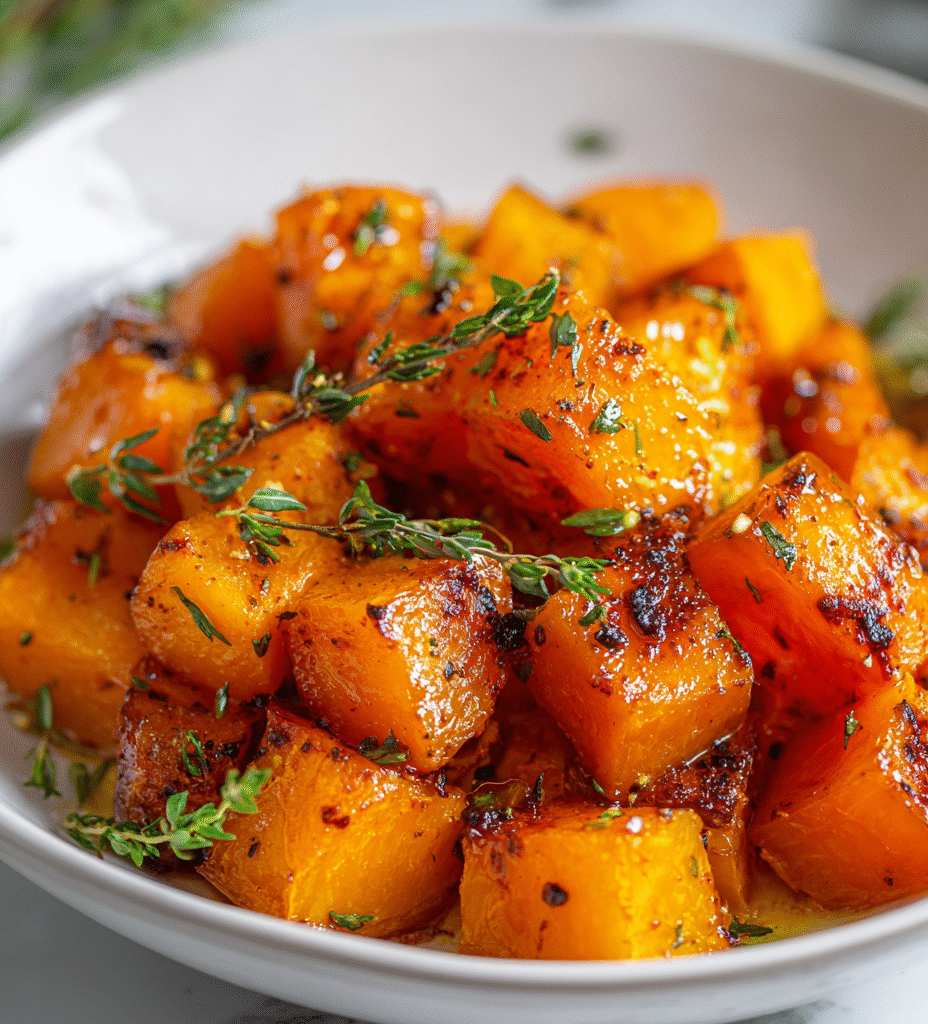
There’s a sweetness in butternut squash that’s often hidden under layers of butter or sugar. Roasting strips away the extraneous and makes that natural flavor burst through, like a warm hug. I love how simple this process is but how it transforms the humble squash into something unexpectedly special.
Every time I roast it, I remember how childhood snacks and cozy dinners can meet in one caramelized, smoky bite. Plus, roasting is forgiving—if you forget for a minute, it’s only a bit more caramelized, not ruined. It’s a reminder that good, honest ingredients don’t need much fuss.
Why this roasted squash keeps calling me back
It’s the way the caramelized edges crunch against tender flesh, releasing complex, smoky-sweet flavors. The simplicity means I can tweak it with whatever’s in the pantry—feta, nuts, a squeeze of lemon—and it transforms again. It’s honest, forgiving, and always reliable after a long day when I want something comforting but not heavy.
Breaking down the simple ingredients
- Butternut squash: Sweet, dense, and slightly nutty. The star of the show, ripe and firm.
- Olive oil: Adds richness and helps the surface caramelize beautifully.
- Salt: Enhances natural sweetness; sea salt works best.
- Smoked paprika: Gives a subtle smoky depth that contrasts the sweet flesh.
- Fresh thyme: Herbaceous and bright, lifts the roasted flavor.
- Honey (optional): A drizzle adds a glossy, sweet finish—think sticky, floral notes.
Tools and equipment that make roasting easier
- Sharp vegetable peeler: To peel the squash smoothly without slipping.
- Chef’s knife: For cleanly slicing and dicing the squash.
- Large baking sheet: To ensure even roasting with enough space.
- Parchment paper: Prevent sticking and make clean-up easier.
- Silicone spatula: To toss the cubes with oil and spices evenly.
Step-by-step guide to roasting butternut squash from peel to plate
Step 1: Preheat your oven to 200°C (390°F).
Step 2: Peel the butternut squash carefully, slicing off the ends first.
Step 3: Cut the squash into even 2-inch cubes, aiming for uniform pieces.
Step 4: Toss the cubes with olive oil, salt, and a pinch of smoked paprika for depth.
Step 5: Spread the pieces on a baking sheet lined with parchment, making sure they don’t crowd.
Step 6: Roast for 25-30 minutes, flipping halfway through, until they’re golden and caramelized.
Step 7: Check for doneness: the edges should be crispy, and the flesh should be tender enough to pierce easily.
Step 8: Once out, let them rest for 5 minutes to settle the juices and flavors.
Step 9: Serve warm, sprinkled with a little fresh thyme or a drizzle of honey if desired.
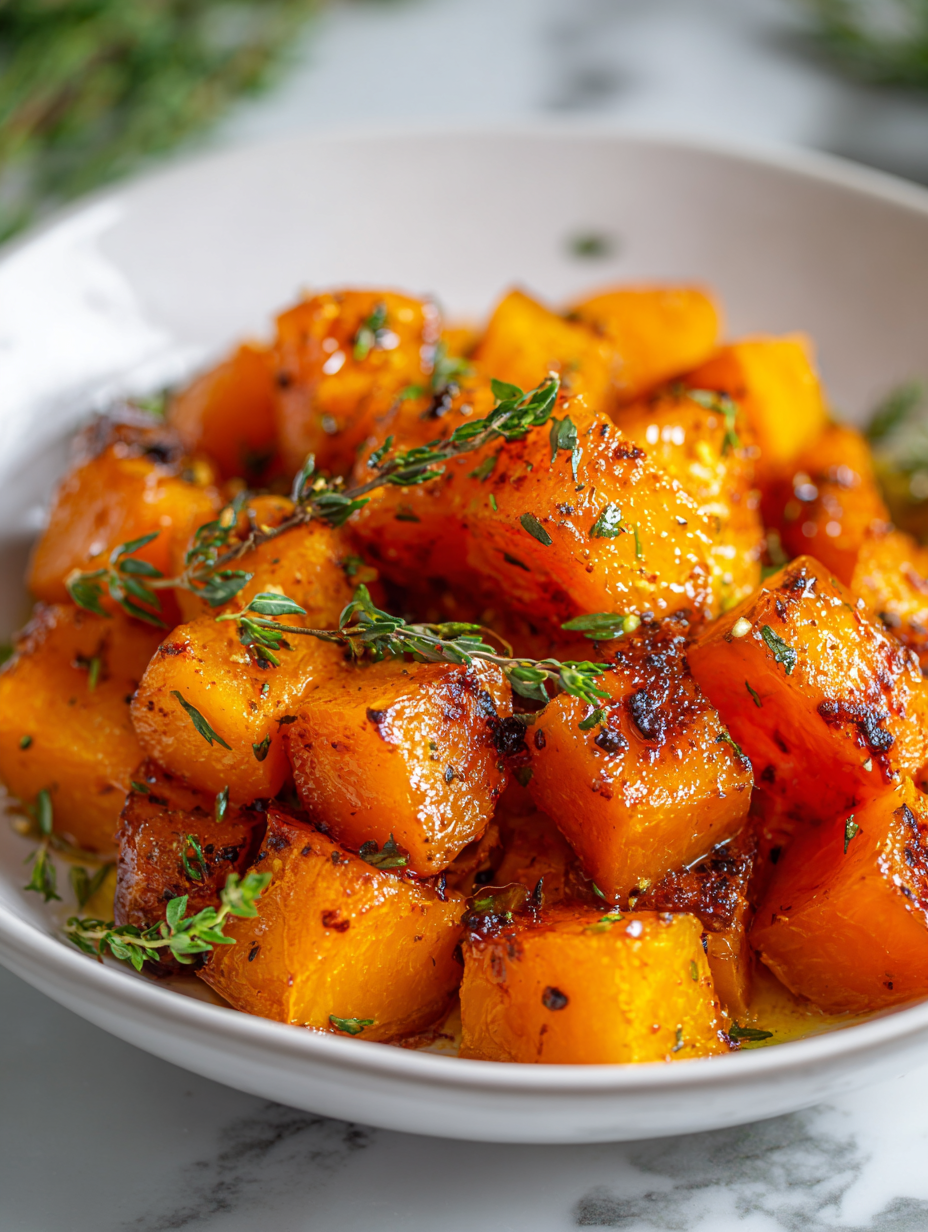
Roasted Butternut Squash with Smoked Paprika and Thyme
Ingredients
Equipment
Method
- Preheat your oven to 200°C (390°F). Line a large baking sheet with parchment paper to prevent sticking.
- Peel the butternut squash carefully using a sharp vegetable peeler, slicing off both ends first for a stable grip.
- Cut the peeled squash into even 2-inch cubes, making sure all pieces are roughly the same size for even roasting.
- Place the cubes in a large bowl and toss with olive oil, ensuring all pieces are coated evenly. This helps them caramelize as they roast.
- Add sea salt and smoked paprika to the bowl, then toss again with a silicone spatula until the spices are evenly distributed.
- Spread the seasoned squash cubes out on the prepared baking sheet in a single layer, making sure they aren’t crowded to promote even browning.
- Roast the squash in the oven for 25-30 minutes, flipping or tossing halfway through, until the edges are crispy and golden, and the flesh is tender when pierced with a fork.
- Remove the baking sheet from the oven and let the squash rest for 5 minutes, allowing the flavors to settle and finish caramelizing.
- If desired, drizzle the roasted squash with honey for extra shine and a touch of sweetness, then sprinkle with chopped fresh thyme for a fresh herbal note.
- Serve the roasted butternut squash warm, enjoying its crispy edges and tender interior with smoky and herbal flavors shining through.
Notes
Cooking checkpoints you can’t miss
- The squash should be tender but not falling apart when pierced.
- Edges should be caramelized and slightly crispy, not burnt.
- Smell the sweet, smoky aroma—if it’s not quite there, give it a few more minutes.
Common roasting pitfalls and how to fix them
- Dull knives make peeling and slicing frustrating.? USE a sharp knife to avoid slipping or uneven cuts.
- Clumping together causes uneven roasting.? TOSS the cubes well to prevent sticking.
- Over-torched edges or undercooked centers.? Watch the oven temperature closely.
- Serving immediately can cause sogginess.? Let the squash rest before serving.
This roasted butternut squash isn’t just a side—it’s a canvas for your flavors. Play with spices, add a splash of balsamic, or mash it up for a comforting puree. It’s honest, straightforward, and all about bringing out the squash’s natural sweetness with just a touch of charred goodness. Keep experimenting, and let this humble veggie surprise you every time.
Hi, I’m Ruby Thorn, the home cook behind The Tender Mess. Join me on the journey of Embracing the mess, fearlessly create —because in the kitchen, the mess sometimes leads to magic.