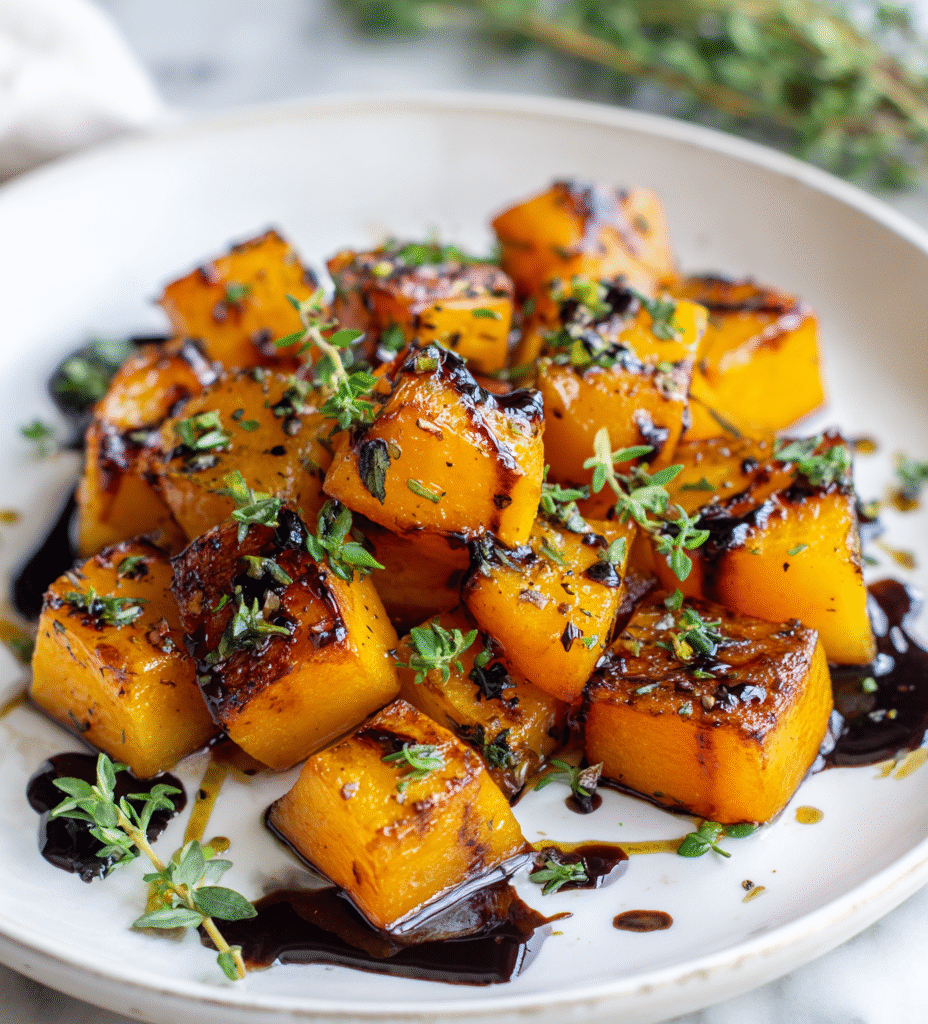

Butternut squash is my go-to for cozy, simple meals that don’t require a lot of fuss. I love how roasting brings out its natural sweetness and makes it easy to prep ahead. There’s something about peeling and slicing that feels like a small victory before the oven does its magic.
Why This Roast Keeps Calling Me Back
The simple act of roasting transforms humble squash into something deeply satisfying. Its versatility makes it perfect for busy nights or lazy weekends. I keep coming back because the smell alone — warm, sweet, smoky — fills the kitchen with a sense of calm and anticipation.
Breaking Down the Simple Ingredients
- Butternut squash: The star—sweet, nutty, and velvety when roasted, with a firm flesh that holds up well.
- Olive oil: Brings richness and helps caramelize the edges, a touch of fruity aroma.
- Salt & pepper: Basic seasoning to enhance natural flavors, but don’t skimp.
- Smoked paprika: Adds a smoky depth that pairs beautifully with the sweetness.
- Balsamic glaze: A tangy drizzle to finish, highlighting the caramelized notes.
- Fresh herbs: Optional—parsley or thyme for brightness, chopped finely.
Tools of the Trade for Roasting Butternut Squash
- Vegetable peeler: To peel the tough skin easily.
- Sharp chef’s knife: To cut through the squash without slipping.
- Baking sheet: To hold the slices while roasting.
- Parchment paper: To prevent sticking and make cleanup easier.
- Silicone spatula: To toss the slices in oil and seasonings evenly.
How to Roast Butternut Squash for Maximum Flavor and Ease
Step 1: Preheat your oven to 200°C (390°F).
Step 2: Peel the butternut squash carefully with a sharp vegetable peeler.
Step 3: Cut the squash in half lengthwise, scoop out the seeds with a spoon.
Step 4: Slice the squash into 1-inch thick crescents, keeping the skin on for extra flavor.
Step 5: Toss the slices in olive oil, salt, pepper, and a pinch of smoked paprika.
Step 6: Arrange the slices on a baking sheet lined with parchment paper.
Step 7: Roast for 25-30 minutes, until the edges are caramelized and the flesh is tender.
Step 8: Check by poking a fork into the thickest part; it should slide in easily.
Step 9: Let the slices rest for 5 minutes out of the oven, the caramelized edges will be irresistible.
Step 10: Serve warm, drizzled with a little balsamic glaze or sprinkled with fresh herbs.
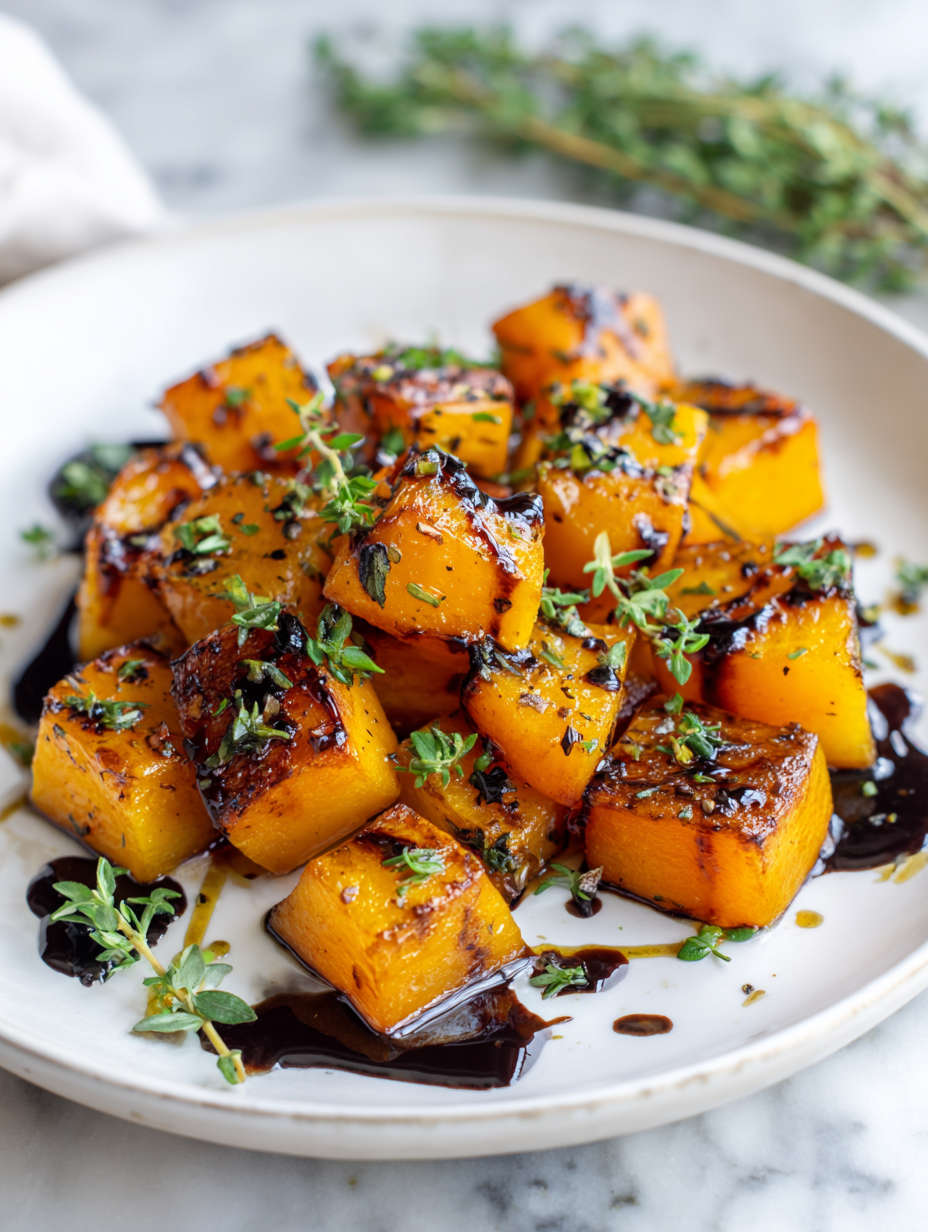
Roasted Butternut Squash with Balsamic Glaze and Herbs
Ingredients
Equipment
Method
- Preheat your oven to 200°C (390°F). Line a baking sheet with parchment paper for easy cleanup.
- Using a sharp vegetable peeler, carefully peel the butternut squash until all the tough skin is removed. Slice the ends off, then cut the squash in half lengthwise and scoop out the seeds with a spoon.
- Place the squash halves cut side down on your cutting board and slice them into 1-inch thick crescents, keeping the skin on for extra flavor and structure.
- In a large bowl, toss the squash slices with olive oil, salt, pepper, and smoked paprika until evenly coated. Use a silicone spatula to toss gently, ensuring each piece is well-seasoned.
- Arrange the seasoned slices in a single layer on the prepared baking sheet, leaving space between each piece for even roasting.
- Roast in the oven for 25-30 minutes, until the edges are golden brown and caramelized, and the flesh feels tender when poked with a fork.
- Remove the baking sheet from the oven and let the slices rest for 5 minutes. The caramelized edges will look irresistibly inviting.
- Transfer the slices to a serving platter, drizzle with balsamic glaze, and sprinkle with freshly chopped herbs for brightness and aroma.
Notes
Cooking Checkpoints & Tips to Keep in Mind
- The squash should be tender and easily pierced with a fork.
- Edges should be nicely caramelized and slightly crispy.
- The slices should hold their shape but not be stiff or dry.
Common Mistakes & How to Fix Them
- DULL KNIFE? Use a sharp knife to avoid slipping and uneven cuts.
- Overcrowded baking sheet? Spread slices out well to prevent steaming.
- Over-torched edges? Keep an eye on the oven; high heat can burn edges quickly.
- Cutting into hot squash immediately? Let the squash rest briefly after roasting to settle flavors.
This simple roasting method brings out the squash’s natural sweetness, with a smoky edge that’s hard to beat. It’s forgiving enough for a busy weeknight and special enough to serve at a dinner party. Feel free to add a splash of tahini or a sprinkle of feta for extra richness. Once you get the hang of it, you’ll find yourself reaching for this dish whenever comfort food calls.
Hi, I’m Ruby Thorn, the home cook behind The Tender Mess. Join me on the journey of Embracing the mess, fearlessly create —because in the kitchen, the mess sometimes leads to magic.