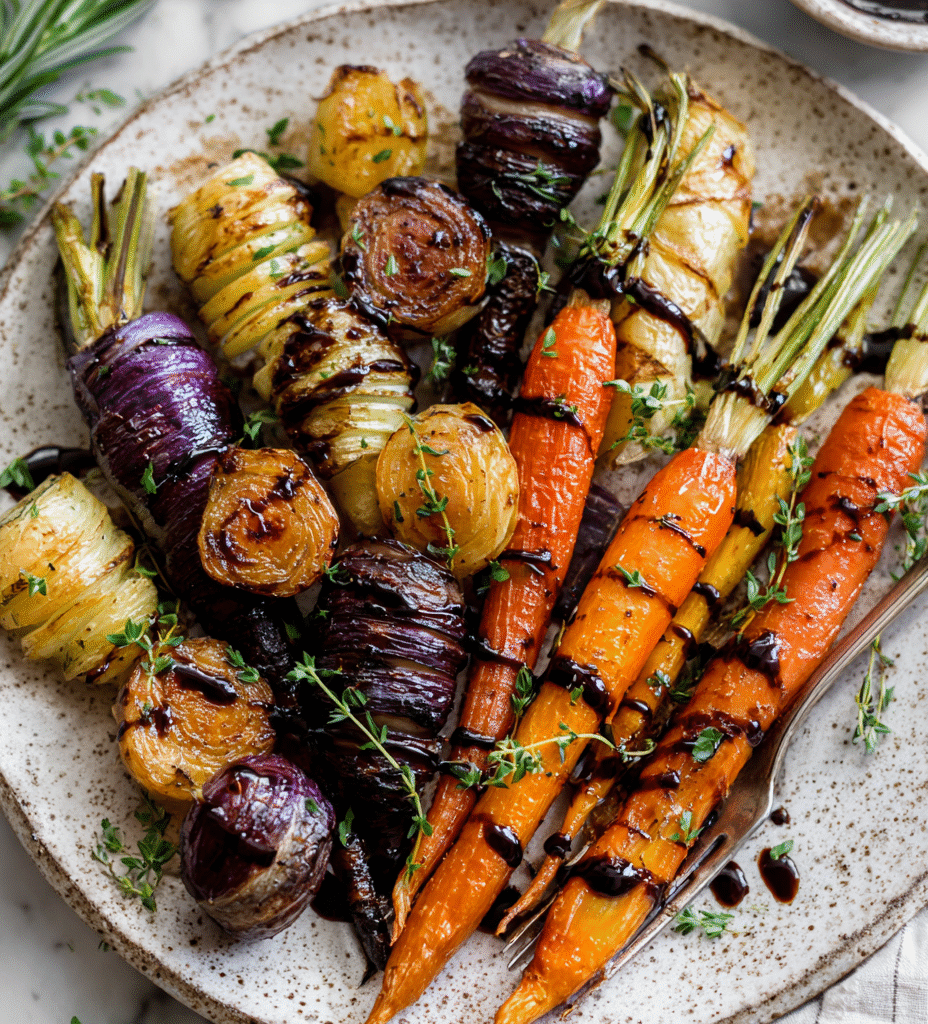

Christmas cooking often leans on tradition, but roasting vegetables adds a touch of rustic chaos that feels honest and satisfying. There’s something about the way the heat transforms humble roots into something sweet, smoky, and vibrant that pulls me into the kitchen every time. It’s a method that welcomes improvisation and celebrates what’s seasonal.
Why I Keep Coming Back to This Roast
It’s the kind of dish that feels like a warm hug, especially on a busy holiday. The smell alone—caramelized, smoky, slightly sweet—sets the tone for a festive feast. It’s forgiving, adaptable, and always turns out a little different, which keeps it exciting year after year.
The Flavors and Foundations of Roasted Veggies
- Root Vegetables: Carrots, parsnips, sweet potatoes—earthy, sweet, and sturdy enough to stand up to high heat.
- Olive Oil: Rich, fruity, helps with browning and flavor—use good quality for best results.
- Salt & Pepper: Basic but essential; enhances sweetness and adds depth.
- Balsamic Vinegar: A splash before roasting adds smoky sweetness and tang.
- Fresh Herbs: Thyme or rosemary brighten the dish, added at the end for freshness.
- Garlic: Roasted garlic becomes mellow and nutty, infusing the vegetables.
- Lemon Zest: Brightens the earthy sweetness with a zing, right before serving.
Tools & Equipment for Perfect Roasted Veggies
- Baking Sheet: To hold and evenly roast your vegetables.
- Parchment Paper: Prevents sticking and makes cleanup easier.
- Chef’s Knife: For chopping vegetables into uniform pieces.
- Mixing Bowl: To toss vegetables with oil and seasonings.
- Spatula or Tongs: To turn and distribute veggies during roasting.
The Art of Roasting for a Festive Table
Step 1: Preheat your oven to 200°C (390°F).
Step 2: Gather your favorite root vegetables—parsnips, carrots, sweet potatoes—and hearty greens like Brussels sprouts.
Step 3: Chop everything into roughly equal pieces to ensure even roasting.
Step 4: Toss vegetables with olive oil, salt, pepper, and a splash of balsamic vinegar for a caramelized touch.
Step 5: Spread out on a baking sheet, making sure they’re not crowded.
Step 6: Roast for about 30-40 minutes, flipping halfway, until edges are golden and crispy.
Step 7: Check for doneness: veggies should be tender inside with a slight char outside.
Step 8: Let rest for 5 minutes before serving to keep their juices in.
Cooking Checkpoints & Tips for Success
- Veggies are tender but still hold their shape.
- Edges are deeply caramelized with a smoky hue.
- A quick taste test confirms seasoning and sweetness are balanced.
Common Mistakes & How to Fix Them
- Overly greasy vegetables.? Use too much oil → Lighten up on the oil, just enough to coat evenly.
- Steamed instead of roasted.? Vegetables crowd the pan → Spread out more, allow air to circulate.
- Uneven charring.? Forgot to flip halfway → Turn vegetables to prevent burning and promote even caramelization.
- Burnt edges without cooked inside.? Oven temperature too high → Lower slightly if vegetables burn before tender.
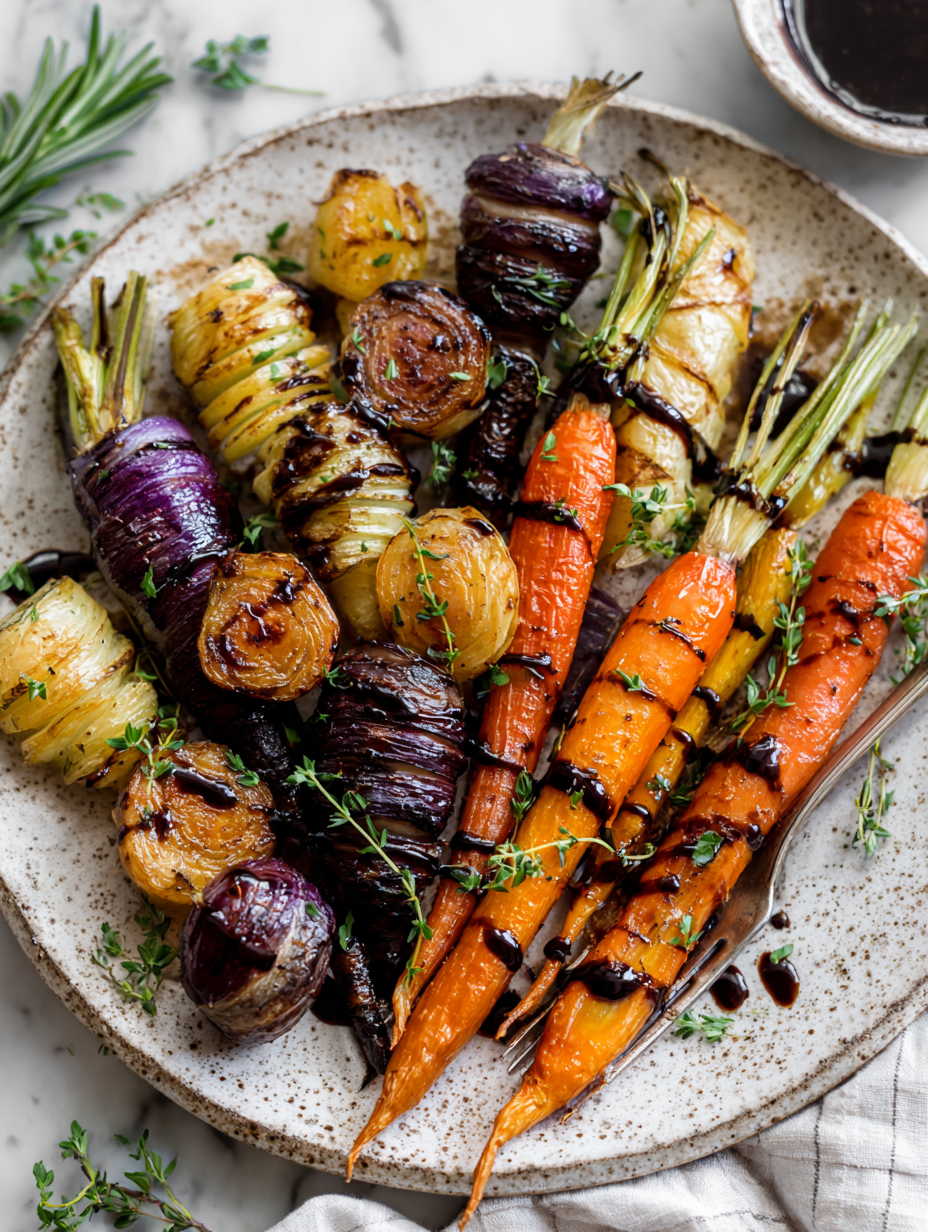
Roasted Root Vegetables with Balsamic and Herbs
Ingredients
Equipment
Method
- Preheat your oven to 200°C (390°F) and line a baking sheet with parchment paper.
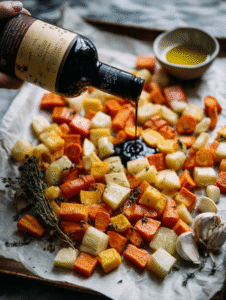
- Gather your root vegetables and chop them into roughly equal pieces—this ensures they cook evenly and develop that beautiful caramelization.
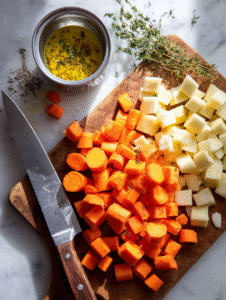
- Place the chopped vegetables into a large mixing bowl, then drizzle with olive oil and sprinkle with salt and pepper. Toss everything together until the vegetables are nicely coated.
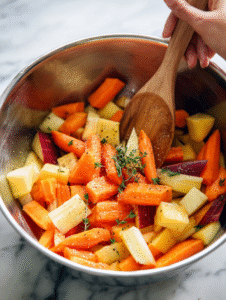
- Add a splash of balsamic vinegar and minced garlic to the bowl, then give everything a gentle toss again to distribute the flavors evenly.
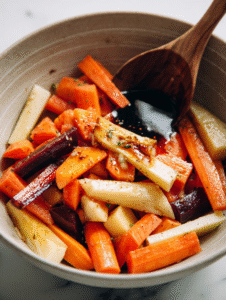
- Spread the vegetables out on the prepared baking sheet in a single layer, making sure they’re not crowded—this helps them roast rather than steam.
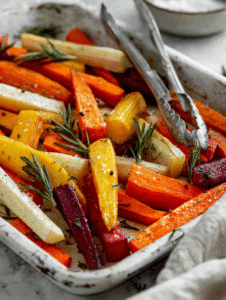
- Roast in the oven for about 30-40 minutes, flipping the vegetables halfway through, until edges are golden and crispy, and the insides are tender.
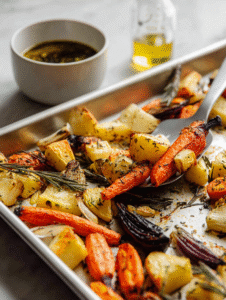
- Once done, remove from the oven and sprinkle with chopped fresh herbs and lemon zest to brighten the flavors.
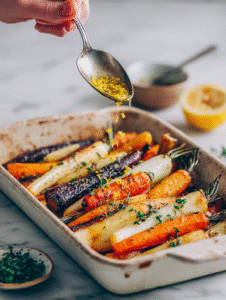
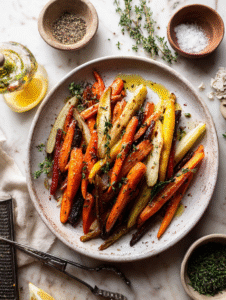
- Give the vegetables a final toss to distribute the herbs and zest evenly, then transfer to a serving platter.
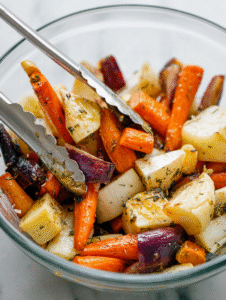
- Serve your roasted vegetables warm, enjoying their smoky, caramelized edges and tender, flavorful interior.
Hi, I’m Ruby Thorn, the home cook behind The Tender Mess. Join me on the journey of Embracing the mess, fearlessly create —because in the kitchen, the mess sometimes leads to magic.